Q2 energy data: 92% renewables and wholesale crash, but household bills still rose
New Zealand’s June-quarter power mix hit a record 92% renewables and wholesale prices fell 66% year-on-year, MBIE data show. Residential costs still rose 10% on network charges, and dry-year insurance remains unfinished.
New Zealand rural confidence stayed positive for a ninth straight quarter in August 2026, with horticulturalists overtaking sheep and beef as the most optimistic sector while investment plans stayed soft.
ASB’s Q2 2026 Regional Economic Scoreboard left Wellington joint last with Gisborne while Canterbury led on dairy cash, jobs and retail. The capital’s multi-quarter underperformance is structural: public-service consolidation, a deep housing correction and stalled population growth colliding with a national OCR still set for nationwide inflation.
MBIE’s 6 September snapshot shows 51.7 days of petrol cover on paper. Only 34.5 of those days sit onshore. Eight of nine ships still float outside the EEZ, and sequential Hormuz then Red Sea stress is already priced into $3-plus petrol.
New Zealand generated a record 92% of its June-quarter electricity from renewable sources and wholesale prices fell 66% from a year earlier, Ministry of Business, Innovation and Employment data show. Residential electricity costs still rose 10% over the same period, mainly on higher network charges.
Energy Minister Simeon Brown said the figures prove the Government's plan for secure, affordable power is working. MBIE's own narrative centres on wet autumn inflows, high hydro storage, record geothermal output and fast-growing solar—not molecules from an LNG terminal that cannot operate before 2028.
The dual ledger matters for households, industrials and gentailers on the NZX Main Board. Spot users captured relief. Mass-market bills did not. The policy stack still has to deliver firming before the next dry year.
What the June quarter actually shows
MBIE's New Zealand Energy Quarterly for the three months ended 30 June 2026, released with ministerial commentary on 10 September 2026, sets out the physical picture.
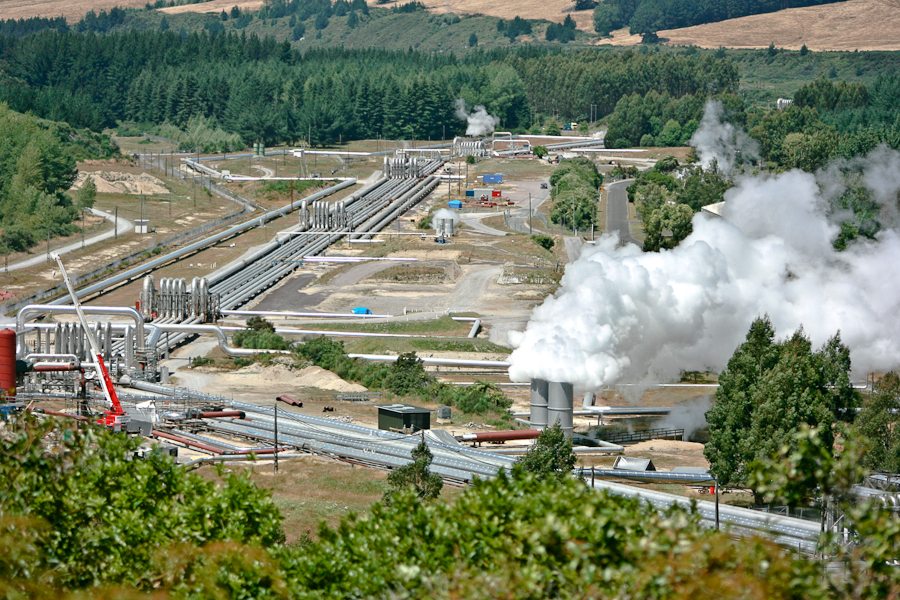
Renewables supplied 92% of generation—the highest June-quarter share on record and the third consecutive quarter above 90%. Geothermal reached an all-time quarterly record of 2,621 GWh, up 5.5% year-on-year. Solar hit a June-quarter high of 242 GWh, up 56.2%.
Total generation rose 1.9%. Renewable generation rose 11.4%. Hydro generation rose 14.7%. Gas-fired generation fell to its lowest June-quarter level since 1981. Coal-fired generation fell to its lowest June quarter since 1996.
June-quarter generation mix growth vs year earlier
Renewables and hydro rose sharply while thermal fuels fell to multi-decade June-quarter lows.
Source: MBIE New Zealand Energy Quarterly, June quarter 2026
Wholesale electricity prices fell 66% year-on-year. Absolute quarterly-average dollars per megawatt-hour were not published in the ministerial or MBIE press releases. Independent monitors at the Electricity Authority's EMI tools remain the place for verified spot levels.
Residential electricity costs increased 10% year-on-year. MBIE attributes that rise primarily to higher network charges funding infrastructure. That split—collapsing wholesale, rising household costs—is the central distributional fact of the print.
MBIE Domains Manager Amapola Generosa framed the outcome in physical terms: strong hydro inflows, continued renewable capacity growth, and sharply lower coal and gas burn. The ministerial release adds policy credit, including the decision to procure an LNG import facility.
Geothermal generation hit an all-time quarterly record of 2,621 GWh in the June quarter, one of the pillars of the 92% renewables result.
Why wholesale fell while bills rose
High April rainfall lifted hydro inflows and left storage above average through winter. Hydro gentailers could offer more volume at lower prices. Geothermal baseload and midday solar displaced thermal plant. Spot prices collapsed.
Large industrials on spot or short-dated contracts felt that relief quickly. Mass-market retail tariffs reset on slower cycles. Regulated network components dominate many household bills. Commerce Commission Part 4 settings, not the half-hourly spot stack, drove the verified 10% residential cost rise.
From 1 July 2026, Electricity Authority rules require the four large gentailers—Contact, Genesis, Mercury and Meridian—to treat competing retailers equivalently on hedges and to show that retail prices reflect expected electricity costs. Time-of-use offer obligations also took effect around the end of June. Those reforms aim to improve pass-through. They do not erase network uplift already in the pipe.
Australia's National Electricity Market offers a contrast. AEMO's Quarterly Energy Dynamics for Q2 2026 reported a NEM-average wholesale price of A$74/MWh, down 47% year-on-year and the lowest second-quarter average since 2020. Regulated residential default-offer benchmarks in most regions were falling for 2026–27. New Zealand's −66% wholesale and +10% residential split is a cleaner illustration of incomplete pass-through.
Dry-year risk has not disappeared
New Zealand's controlled hydro storage is only about 4 TWh—roughly 10% of annual generation—according to the OECD Economic Survey of New Zealand 2026. Norway holds multi-season buffers on the order of 70–80% of annual generation. That structural thinness produces dry-year stress roughly every three to five years, including 2001, 2005, 2008, 2012, 2017, 2021 and 2024.
Winter 2024 was the mirror image of mid-2026. Low lakes met collapsing domestic gas deliverability. Thermal plant ran hard where fuel allowed. Industry curtained. Emergency gas reallocations involving Methanex featured in official dry-year accounts. Brown noted that 2026 avoided that sequence because of rainfall and storage, not because the island's firming problem was solved.
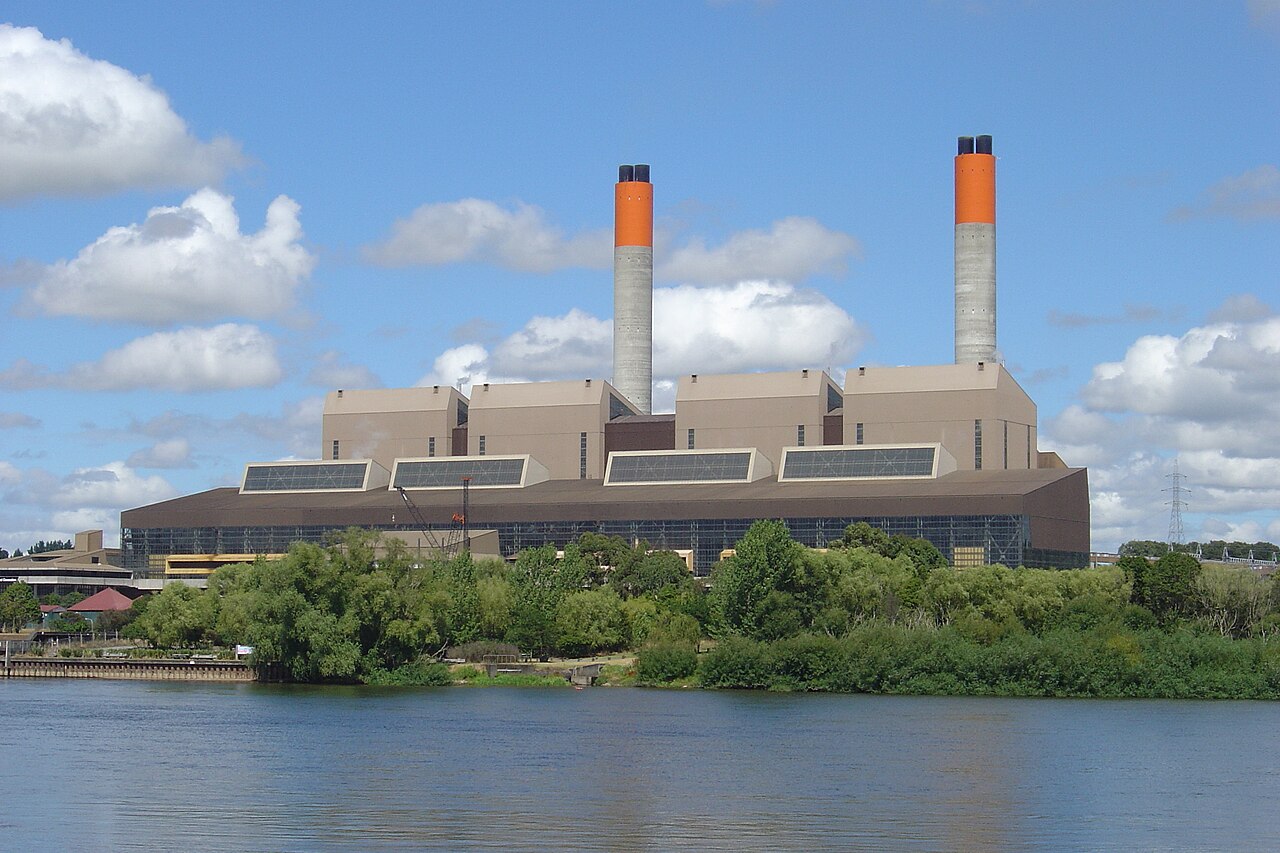
Transpower's Security of Supply work for winter 2025 flagged about a 20% fall in natural gas production in 2024 and further expected declines, plus the scheduled end-2025 exit of Taranaki Combined Cycle. Since 2012 about 1,100 MW of firm grid thermal has retired. Huntly's remaining Rankine units are the main long-duration coal and heavy-fuel option. Fuel availability, not nameplate capacity, binds them.
Huntly's Rankine units remain the main long-duration thermal backstop for dry years, though fuel availability rather than capacity now binds them.
MBIE dry-year analysis has pointed to roughly 1.5 TWh of additional cover beyond Huntly coal in severe sequences. Concept Consulting and KPMG modelling in February 2025 estimated that removing Rankines from the storage stack could lift wholesale prices around 60% in the short term and 11% longer term, with thermal energy need ranging from about 200 GWh in wet years to about 2,700 GWh in the driest high-renewables cases.
Contact Energy chief executive Mike Fuge said in May 2026 that dry-year risk had eased with new solar and geothermal, fuller hydro and coal stockpiles, and more renewable capacity—though the risk had not gone. He cited roughly an extra 2–3 TWh of renewable energy relative to three years earlier.
LNG and the reliability obligation are insurance, not Q2 drivers
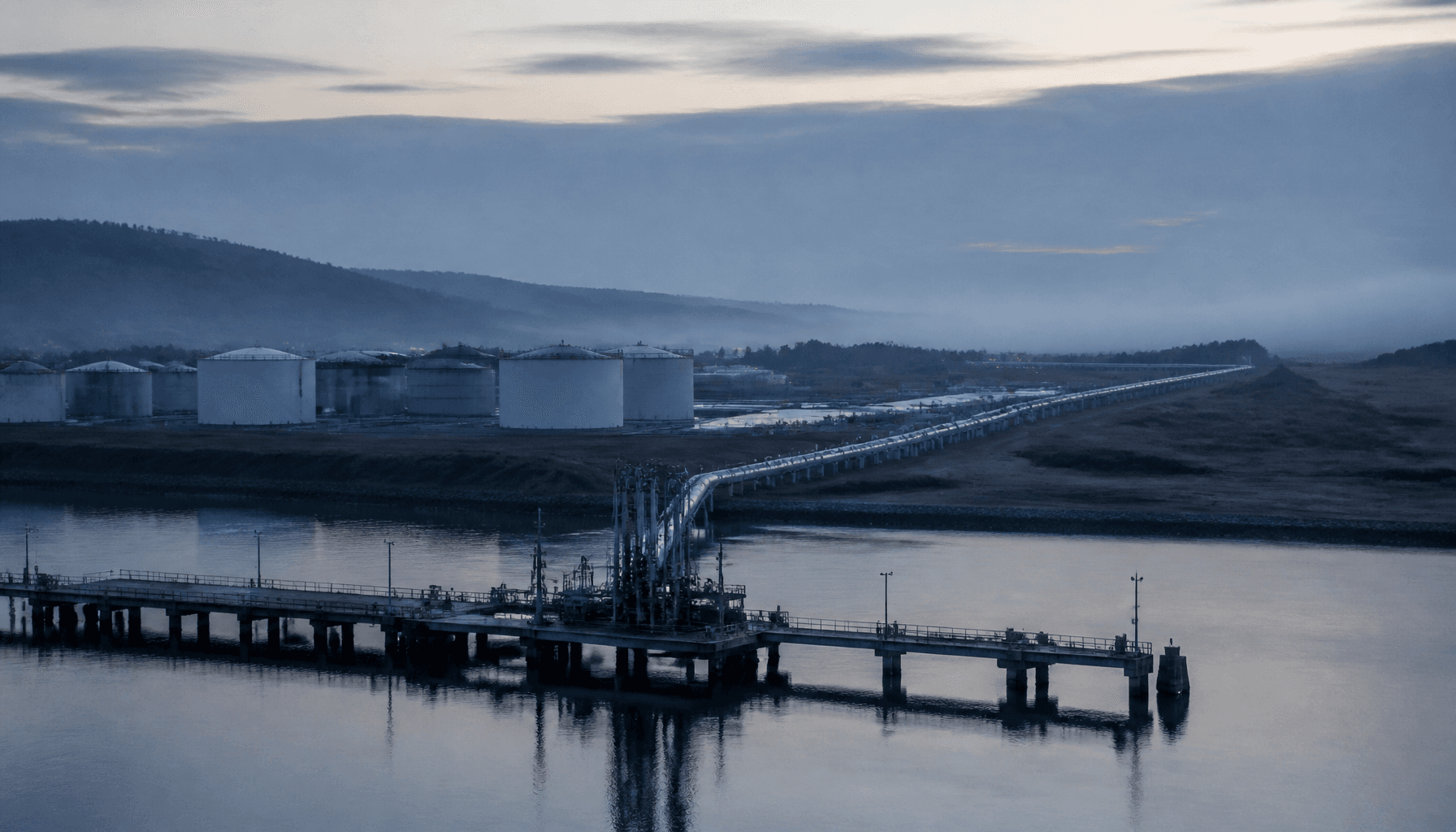
On 8 June 2026 the Government said two providers were progressing to a request for proposals for an LNG import facility. A preferred-provider contract was targeted in 2026, with operations from 2028. Beehive materials claimed that since the February LNG announcement, wholesale electricity prices for 2028 and 2029 had fallen by around $20/MWh, equating to potential system savings of up to $800 million a year.
Funding is framed as an electricity-sector responsibility rather than a household levy. Parallel work on a Winter Energy Reliability Obligation would require obligated parties to demonstrate dry-year cover.
An FSRU that cannot inject gas before 2028 cannot explain June 2026 spot. Futures markets can price 2028 firming and compress outer-year hedges. That is a legitimate announcement channel. It is not physical supply in a wet winter.
Siting debate centres on floating storage and regasification concepts linked to Port Taranaki. Port Taranaki chief executive Simon Craddock has described such a facility as critical for security and renewable enablement. Local opponents in New Plymouth raise safety and amenity concerns. Full Safety Case and coastal consenting still sit ahead of any 2028 commercial operation date.
Brown also cites fast-track approval of eight renewable projects and repeal of Labour's offshore oil and gas exploration ban. The eight projects are stated in aggregate in the 10 September release. Exploration-ban repeal restores a long-cycle investment signal. It has not restored near-term gas deliverability for the 2026–27 winters.
Trade-offs the print forces into the open
Security versus carbon optics: LNG optionality and residual Rankine coal or heavy fuel oil lower dry-year price and curtailment risk, which critics call fossil lock-in relative to batteries, demand response, biomass or revived centralised storage such as the cancelled Lake Onslow investigation.
Who pays for firming: sector-funded LNG optionality and reliability-obligation duties on gentailers and large users allocate balance-sheet and contracting risk that can still embed in wholesale and long-term power purchase agreements.
Speed versus consent risk: fast-track renewables and a Port Taranaki FSRU path accelerate capacity and fuel optionality, but local opposition and regulator processes can still slip the 2028 date.
Household distribution: energy-component softness does not offset regulated network uplift—spot-exposed industrials gain while households and small businesses on standard tariffs saw the verified 10% cost rise.
Fiscal and regulatory cost of insurance: procurement and obligation design reduce the expected cost of another 2024-style shock and can compress futures premia, but raise near-term compliance, contracting complexity and potential strike-cost exposure tied to the New Zealand dollar and global LNG prices.
Second-order effects for the next two winters and beyond
Near term, soft wholesale supports energy-intensive manufacturing, cold storage, data and processing on spot or short contracts. The CPI energy component and cost-of-living politics stay live because households feel network-led increases, not the spot collapse.
Gentailer earnings mix shifts. Lower spot, fuller lakes and hedge-book revaluation show up in equity prices. Meridian Energy recently traded near NZ$5.26, close to its 52-week low of NZ$5.20 against a high of NZ$6.05. Contact Energy recently traded near NZ$8.55, at its 52-week low against a high of NZ$9.99.
Over twelve months the critical path is LNG RFP to preferred provider to contract. Slippage pushes commercial operation past the political framing that the next serious dry year could arrive around 2028. Reliability-obligation design will reallocate cover duties. Solar's 56% June-quarter jump signals midday price-setting is becoming material. Gas deliverability and Methanex's New Zealand footprint set the residual thermal fuel stack before imports arrive.
Over two to three years, an on-time FSRU with clear fuel-access rules should structurally compress dry-year futures premia. That lowers the insurance embedded in long-term PPAs and supports electrification, process-heat conversion and electric vehicles. Delay re-opens Onslow-style debates and raises the odds of another industrial shock. Lines-company capital expenditure for growth and decarbonisation will keep upward pressure on the network component of bills even if energy components soften—the central tension for households and small firms.
Taranaki stands to see port and construction activity if the project proceeds, alongside sustained consent politics. Trade-exposed load—aluminium, dairy processing and similar—watches firming credibility. International readers will score LNG as transition insurance or climate-credibility damage depending on framing. Capital will still have to choose among renewables, fuel logistics and networks.
Historical context without false comfort
New Zealand has long posted high OECD renewable shares on legacy hydro and geothermal. What is new is rapid solar growth from a tiny base, continued geothermal expansion, progressive thermal retirement, and explicit rejection of large pumped hydro in favour of distributed renewables plus imported thermal optionality.
Wet years reliably produce high renewable shares and soft wholesale prices. Dry years reverse them. Quarterly means understate the skewness of dry-year price spikes. Winter 2024 peak daily averages far above normal winter levels are the political origin story of the current LNG and reliability-obligation programme. Q2 2026 is the weather gift that lets ministers claim delivery before the insurance policy is built.
Norway's storage depth makes dry-year risk second-order. Great Britain institutionalises firming through interconnectors, a deep gas fleet and a capacity market. New Zealand is an island with thinning indigenous gas. Those comparators frame 92% quarterly renewables as strong on carbon metrics and still weather-contingent on security.
The counter-argument, steeled
The strongest opposing read is straightforward. Weather and multi-year build did the work. Much of the geothermal and solar capacity now online was consented or committed under prior settings. An LNG facility not operating until 2028 cannot have caused June 2026 spot declines. Attributing the fall to the procurement decision confuses futures anticipation with physical supply. Retail consumers saw higher, not lower, costs. Repealing the exploration ban has not delivered material new gas molecules for this winter or next.
That read aligns with MBIE's physical narrative more closely than with the broadest ministerial causality claims. It does not erase the 2024 crisis or the thin storage math. It does require ministers to separate announcement effects on 2028–29 hedges from spot outcomes in a wet June quarter.
Q2 2026 was a genuine high-renewables, low-thermal, low-wholesale quarter. Households still paid more.
Independent scoreboards—EMI spot and forwards, Transpower security of supply dashboards, OECD structural comparisons—will keep testing the claim that policy, not hydrology, is in the driving seat.
Open questions before the next print
Absolute June-quarter wholesale averages in dollars per megawatt-hour should come from NZEQ and EMI tables, not secondary briefs. Any sales-weighted residential cents-per-kilowatt-hour series must be reconciled with MBIE's 10% residential-cost statement and with QSDEP modelled national tariffs near 42.0 c/kWh (GST-inclusive low-user blend) at 15 May 2026.
The named list and consent status of the eight fast-track renewables remain aggregate in the 10 September release. Genesis–Methanex gas agreement volumes should be taken from Genesis's primary disclosures before hard citation. Late-winter hydro storage percentages belong on Transpower's live security dashboard, not only in ministerial adjectives.
LNG timeline integrity is the binding policy question: preferred provider and contract in 2026, operations in 2028, clear rules on who holds fuel-access and strike-cost risk.
What to watch next
Watch the LNG RFP outcome and any contract announcement before year-end 2026. Watch Transpower storage trajectories into spring spill season and the 2027 winter outlook. Watch Commerce Commission network path resets for the residential bill trajectory. Watch EMI forwards for 2028–29 as the market prices firming credibility. Watch whether reliability-obligation design lands as a workable cover duty or a compliance thicket.
Q2 2026 was a genuine high-renewables, low-thermal, low-wholesale quarter. Households still paid more. The insurance policy against the next 2024 is still on the slipway. That is the ledger that matters for New Zealand's next dry year.