RBNZ 4-3 Hold Injects NZD Weakness and Retail Uncertainty
The Reserve Bank of New Zealand's Monetary Policy Committee delivered a 4-3 surprise hold on the official cash rate at 2.75 per cent on 28 October 2026, defying near-universal expectations of a 25 basis point rise and triggering an immediate 1.3 per cent drop in the New Zealand dollar to 56.1 US cents.
The Reserve Bank of New Zealand's Monetary Policy Committee voted 4-3 on 28 October 2026 to hold the Official Cash Rate at 2.75%, defying market expectations of a 25 basis point hike to 3.00%. The decision underscores internal divisions on whether recent fuel-driven inflation pressures warrant immediate pre-emptive action or a pause to assess transmission of the July and September increases.
The Reserve Bank of New Zealand is expected to raise the Official Cash Rate by 25 basis points to 3.00 per cent on 28 October 2026, the third consecutive increase in a tightening cycle that began in July.
The Sharesies Index of investor confidence averaged 38 in the September 2026 quarter, down from 57 in the June quarter, as the Reserve Bank of New Zealand raised the official cash rate twice and annual CPI inflation hit 4.1 percent driven by higher fuel prices.
The Reserve Bank of New Zealand's Monetary Policy Committee delivered a 4-3 surprise hold on the official cash rate at 2.75 per cent on 28 October 2026, defying near-universal expectations of a 25 basis point rise and triggering an immediate 1.3 per cent drop in the New Zealand dollar to 56.1 US cents.
This decision came after two consecutive 25 basis point hikes in July and September that had lifted the OCR from 2.50 per cent. Markets had priced a 93-95 per cent chance of another increase. The vote split saw Governor Anna Breman join external members Carl Hansen, Prasanna Gai and Rebecca Williams in favour of holding, while Chief Economist Paul Conway, Assistant Governor Karen Silk and external member Hayley Gourley voted to raise.
The RBNZ statement noted that annual CPI inflation stood at 3.7 per cent in the September quarter, below forecast but above the 1-3 per cent target band. It warned that near-term inflation would likely rise to 4.4 per cent in the December quarter due to elevated global fuel prices and the weaker exchange rate. Core measures had firmed to the upper end of the target with price increases becoming more broad-based.
Official Cash Rate Recent Path
The hold follows a tightening cycle after easing from the 2024 peak.
Source: RBNZ statements and media releases
The drivers behind the conditional pause
The committee agreed tighter policy would likely be needed but stressed the decision remained conditional on incoming data over the next six weeks. Headline inflation eased in the September quarter according to Stats NZ, yet the bank revised up its near-term forecast. Wage growth remained subdued and medium-term inflation expectations stable.
The exchange rate has fallen around 3 per cent since early September, adding imported inflation pressure at a time when fuel costs already pushed tradables prices higher. Petrol prices rose 19.1 per cent in the 12 months to the September quarter, contributing 17.5 per cent to the annual CPI increase.
The trade-offs for retailers and households
Retail NZ chief executive Carolyn Young highlighted the mixed impact. Stable borrowing costs could support consumer confidence heading into the holiday season. Yet a weaker currency raises costs for imported goods that dominate New Zealand retail.
In New Zealand we don't manufacture a lot, so if you think about the retail environment anything including groceries, apparel, footwear, DIY stores, a lot of the products are imported from overseas... all of those items are going to be at a higher price because of the exchange rate.
From a consumer perspective the hold may create confidence that mortgage rates or rents stay stable. Cotality chief property economist Kelvin Davidson noted it is probably only a temporary reprieve with an increase likely at the next meeting.
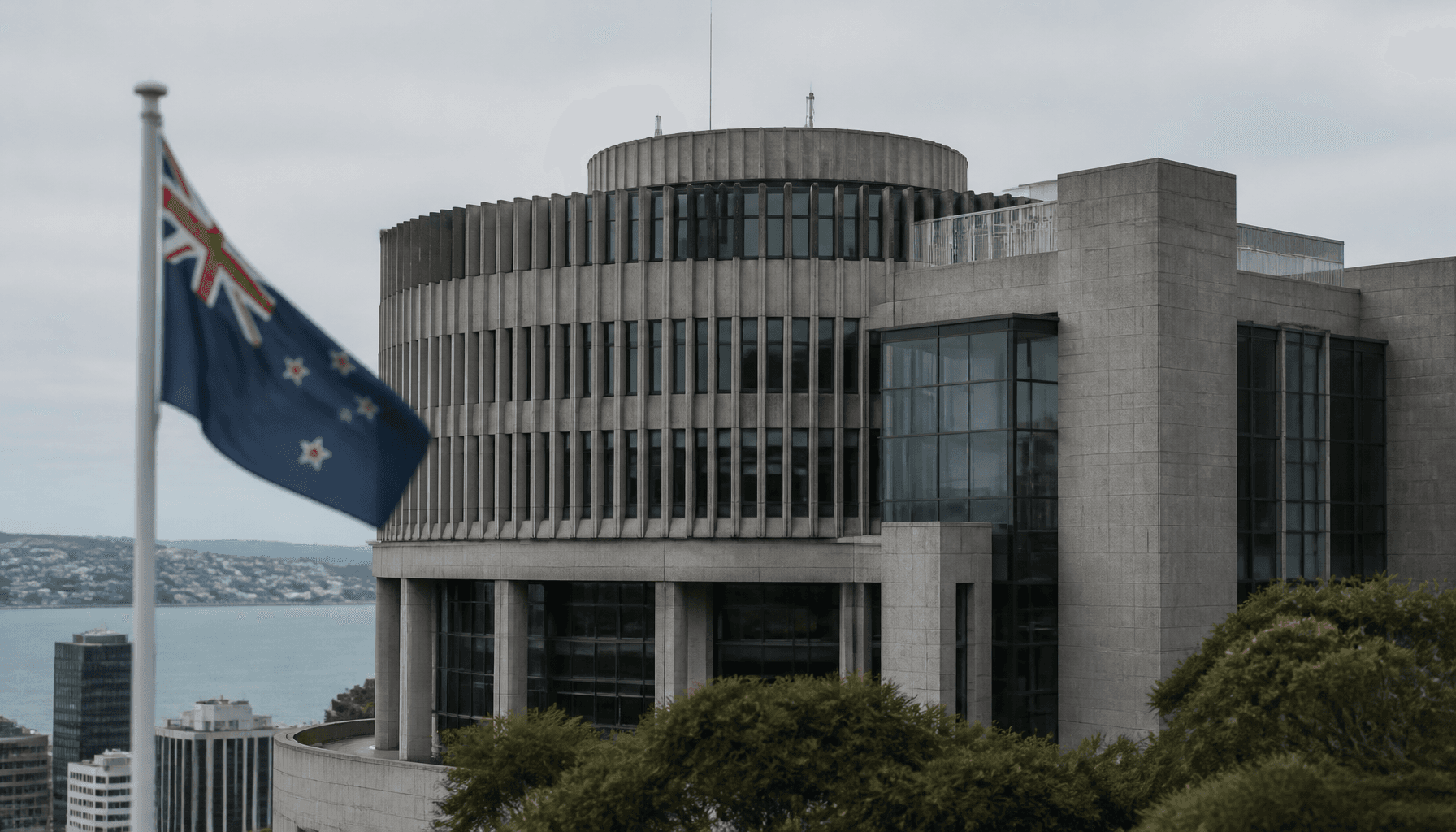
The Reserve Bank of New Zealand, whose Monetary Policy Committee voted 4-3 to hold the OCR at 2.75 percent on 28 October 2026.
Second-order effects on margins and investment
The NZD depreciation raises landed costs for the next import order cycle. Retailers face margin pressure or potential pass-through to shelf prices within one to three months. Fixed mortgage repricing dynamics mean many households see limited immediate benefit, softening the consumer-confidence channel.
Residential investment in Auckland may accelerate if borrowing costs remain lower than expected, adding to domestic demand and core inflationary pressure. The December Monetary Policy Statement becomes a focal event with elevated market sensitivity.
Historical context and credibility risks
Westpac noted this was the first non-pandemic hold against heavy market pricing for a hike. Previous surprise decisions, such as the 2016 easing, triggered immediate currency moves that partially offset intended effects.
The pandemic holds occurred against demand collapse. The current environment features demand fragility alongside supply-side inflation from energy markets, a fundamentally different setting.
The counter-argument and data dependence
Critics including BNZ's Stephen Toplis expressed surprise, arguing the move added to inflationary pressure by weakening the currency. ASB's Mark Smith labelled it a dovish hold and forecasts three consecutive 25bp hikes from December to a 3.5 per cent peak. ANZ's Sharon Zollner said a hike would have been the most prudent course given resilient activity and rising core measures.
The committee's own statement emphasised that information over the next six weeks could change the stance in either direction. Former RBNZ economist Michael Riddell questioned whether the bank was being gun shy on persistent inflation.
Open questions on transmission and fiscal boundary
Key uncertainties remain around the RBNZ's internal modelling of NZD pass-through and retailer hedging practices. The proportion of floating versus fixed mortgages will determine actual household transmission.
National finance spokesperson Nicola Willis linked the decision partly to government financial discipline. Former RBNZ economist Michael Riddell described such comments as pure politicising. The monetary-fiscal boundary faces scrutiny ahead of the November 2026 election.
The RBNZ has left the door open for an increase at the 9 December meeting. Markets priced about a 75 per cent chance of a December rise after the decision. Retailers and households will watch the December CPI print and the Monetary Policy Statement closely for clarity on the path ahead.