Select Committee backs India FTA bill with pro-rata quota fix
Parliament’s Foreign Affairs, Defence and Trade Committee has recommended by majority that the India Free Trade Agreement Legislation Amendment Bill pass, with technical fixes so exporters can use first-year quotas if the deal enters force mid-year.
New Zealand rural confidence stayed positive for a ninth straight quarter in August 2026, with horticulturalists overtaking sheep and beef as the most optimistic sector while investment plans stayed soft.
Parliament passed the India Free Trade Agreement legislation 93–29 on 16 September 2026. Preferential tariffs await mutual ratification, with Indian officials pointing to mid-to-late October entry into force.
Electric vehicles on New Zealand roads have avoided about $90 million in oil-product imports since the start of 2024, a Newsroom analysis estimates, as Stats NZ reported fuel led the rise in merchandise imports in the year to July 2026.
Parliament’s Foreign Affairs, Defence and Trade Committee has recommended by majority that the India Free Trade Agreement Legislation Amendment Bill pass, with technical fixes so exporters can use first-year quotas if the deal enters force mid-year.
The report, presented on 10 September 2026, focuses on domestic implementing law rather than the treaty text signed in New Delhi on 27 April 2026. The committee found the bill as introduced did not handle entry into force part-way through a quota year.
That gap, the committee said, could create uncertainty for applicants about available quota, and potentially miss an opportunity to benefit from reduced tariffs in the first year. It proposed pro-rata allocations for apple, kiwifruit, albumin and mānuka honey quotas, plus refinements to search-and-seizure powers for quota offences.
Trade and Investment Minister Todd McClay welcomed the recommendation. He said there is strong support for this important agreement across the business community, the primary sector, the services sector and many New Zealanders up and down the country. The government is still targeting ratification later in 2026.
Prime Minister Christopher Luxon, asked about Indian media reports of a possible October entry into force, replied that it was pretty exciting and said the government was cranking remaining stages through the House before it rises. The bill still needs second reading, Committee of the Whole, third reading and Royal Assent.
The commercial core
The commercial core is tariff liberalisation on 95 percent of New Zealand’s current export value to India. MFAT’s National Interest Analysis states that 57 percent of that trade becomes duty-free on day one, rising to 82 percent once staging ends, with the residual 13 percent facing sharp cuts. The trade-weighted average tariff on current New Zealand exports falls from about 10 percent to 3 percent.
Static tariff savings are estimated at about NZ$43 million a year from entry into force, rising to about NZ$62 million when fully implemented, based on current trade levels. Dynamic trade creation is expected to lift actual savings higher over time.
Independent Motu modelling commissioned by MFAT projects New Zealand annual GDP (2024 dollars) NZ$135.0 million higher in 2027, NZ$382.4 million higher in 2036 and NZ$657.7 million higher in 2050 relative to a no-FTA baseline — 0.03 percent, 0.07 percent and 0.10 percent of baseline GDP respectively. By around 2037, the NIA cites annual GDP about 0.07 percent or NZ$401 million above baseline.
Bilateral goods and services exports to India are projected NZ$339.9 million (16.3 percent) higher in 2027 and NZ$1,271.6 million (25.0 percent) higher in 2050. Two-way goods and services trade stood at NZ$3.95 billion in 2025, with New Zealand goods exports about NZ$820 million and services about NZ$1.21 billion.
Sector-by-sector outcomes
Flagship goods outcomes include apple tariff-rate quotas with the in-quota rate halved to 25 percent on volumes starting at 32,500 tonnes and rising to 45,000 tonnes, and kiwifruit duty-free volumes rising from 6,250 to 15,000 tonnes plus an immediate 50 percent cut on over-quota trade. Mānuka honey receives a staged cut of the 66 percent tariff down to 16.5 percent over five years. Sheepmeat, wool, coal and most forestry products gain near-immediate duty-free or sharply reduced treatment. Wine tariffs of 150 percent fall over 10 years, with an MFN side-letter.
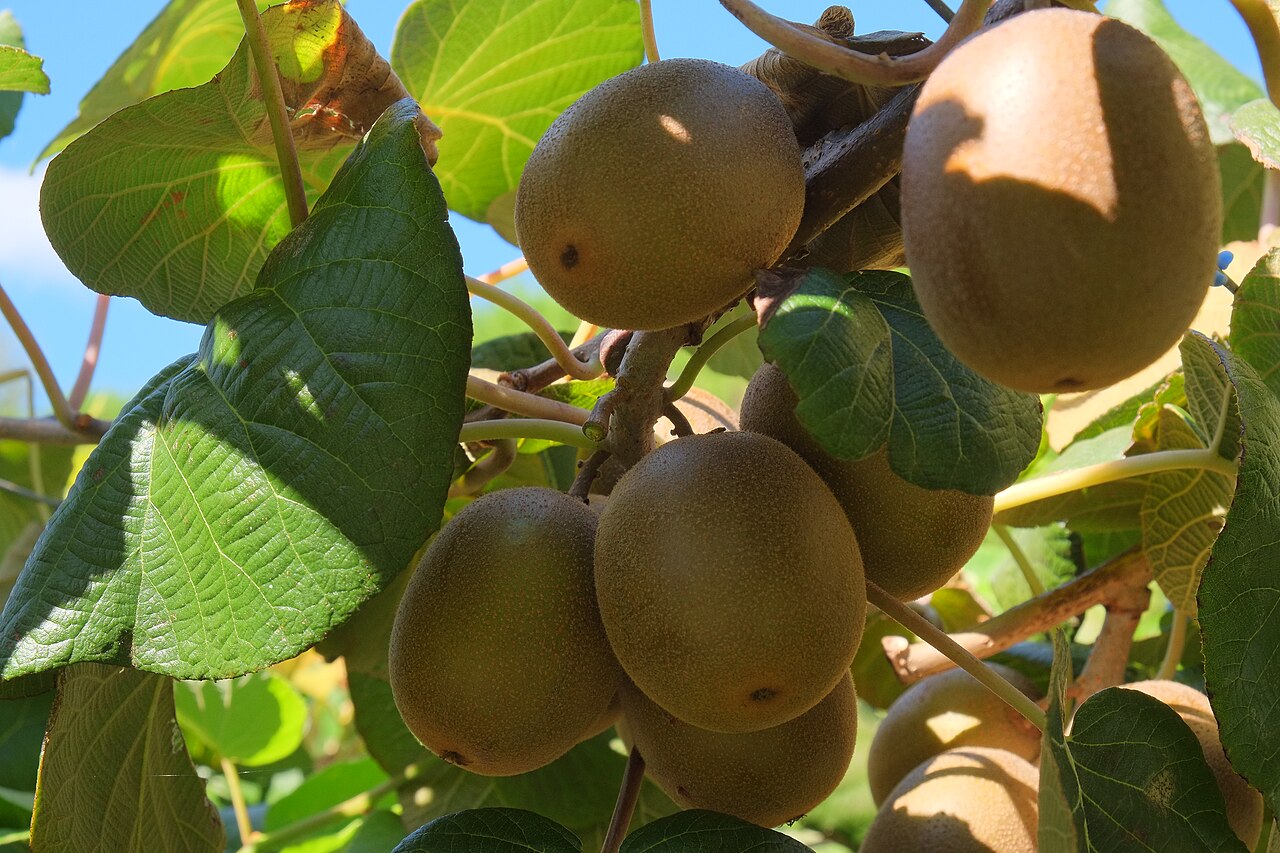
Kiwifruit is among the sectors set to benefit most from the India FTA's expanded duty-free quotas, which the Select Committee's pro-rata fix aims to protect in the deal's first year.
Dairy remains largely outside core access. Limited wins cover re-exports, phased bulk infant formula, albumins under a 3,000-tonne quota, and a consultation clause if India later opens dairy to comparable partners. Fonterra Group director of global external affairs Simon Tucker said it is disappointing that the negotiations with India were unable to secure any significant new core dairy access opportunities for New Zealand into the Indian dairy market, while noting India’s long-standing sensitivities.
Horticulture and meat groups have been more positive. Zespri chief executive Jason Te Brake said India represents a huge opportunity for kiwifruit, with the world’s largest population and fastest-growing large economy. Meat Industry Association independent chair Nathan Guy called conclusion of negotiations a strategically significant milestone for New Zealand’s red meat sector, citing relief from the prior sheepmeat tariff that had constrained access relative to Australia.
It is disappointing that the negotiations with India were unable to secure any significant new core dairy access opportunities for New Zealand into the Indian dairy market.
Investment, mobility and the fiscal picture
India receives 100 percent duty-free access for its exports into New Zealand from day one. New Zealand undertakes a best-endeavours commitment to promote foreign direct investment into India with an aim of US$20 billion over 15 years — clarified by officials as promote, not a hard delivery obligation. Mobility settings include up to 5,000 Temporary Employment Entry places at any one time, plus working-holiday and student pathways.
On the Crown accounts the near-term fiscal imprint is second-order. The NIA estimates elimination of tariffs on Indian imports removes about NZ$15 million a year in customs revenue, outweighed on paper by exporter tariff savings and expected trade growth that supports the tax base over time. Quota administration and investment-promotion facilitation are modest administrative costs.
The politics and what's left
Politically the path has been bipartisan but not unanimous. The bill passed first reading 93–29 on 25 June 2026, with National, Labour and ACT in favour. New Zealand First used the coalition agree-to-disagree mechanism and opposed the deal, citing dairy exclusion and mobility provisions. An earlier treaty examination by the same committee concluded after nearly 1,800 submissions that on balance New Zealand would be better off with the agreement than without it.
The remaining risk sits on the parliamentary timetable and India’s own ratification pace. Both governments have publicly targeted entry into force before the end of 2026. The committee’s pro-rata fix is designed to avoid stranded first-year quota if that date falls mid-year. Exporters in kiwifruit, apples, meat, forestry, wine and honey will watch the second reading calendar closely; dairy will continue to press the consultation door left ajar.