RBNZ Split Decision Signals Bounded Pause in Tightening Cycle
The Reserve Bank of New Zealand's Monetary Policy Committee voted 4-3 on 28 October 2026 to hold the Official Cash Rate at 2.75 per cent. Governor Anna Breman's alignment with external members for the hold places the full credibility burden on the 9 December Monetary Policy Statement.
The Reserve Bank of New Zealand's Monetary Policy Committee voted 4-3 on 28 October 2026 to hold the Official Cash Rate at 2.75 percent, defying market expectations of a further hike and leaving the tightening cycle conditional on incoming data.
The Reserve Bank of New Zealand's Monetary Policy Committee delivered a 4-3 surprise hold on the official cash rate at 2.75 per cent on 28 October 2026, defying near-universal expectations of a 25 basis point rise and triggering an immediate 1.3 per cent drop in the New Zealand dollar to 56.1 US cents.
The Reserve Bank of New Zealand's Monetary Policy Committee voted 4-3 on 28 October 2026 to hold the Official Cash Rate at 2.75%, defying market expectations of a 25 basis point hike to 3.00%. The decision underscores internal divisions on whether recent fuel-driven inflation pressures warrant immediate pre-emptive action or a pause to assess transmission of the July and September increases.
The Reserve Bank of New Zealand's Monetary Policy Committee voted 4-3 on 28 October 2026 to hold the Official Cash Rate at 2.75 per cent. Governor Anna Breman's alignment with external members for the hold places the full credibility burden on the 9 December Monetary Policy Statement.
The Decision and Its Immediate Implications
The Reserve Bank of New Zealand held the Official Cash Rate at 2.75 per cent in a 4-3 split decision on 28 October 2026. Governor Anna Breman, Carl Hansen, Prasanna Gai and Rebecca Williams voted to hold. Paul Conway, Hayley Gourley and Karen Silk voted for a 25 basis point increase to 3.00 per cent. The majority favoured a pause to assess lagged effects of prior hikes amid subdued domestic demand, according to the Reserve Bank of New Zealand Monetary Policy Review October 2026.
All members agreed tighter policy is likely required but remains conditional on the economic outlook. Information over the next six weeks can change the stance, the Bank stated.
This outcome trades short-term inflation-fighting momentum for additional data. It leaves the December Monetary Policy Statement as the key inflection point.
Drivers Behind the Split
Headline CPI inflation eased to 3.7 per cent in the September 2026 quarter, down from 4.1 per cent in June, Stats NZ reported. Core measures firmed to the upper end of the 1-3 per cent target band. Near-term inflation is projected to spike to 4.4 per cent in December, largely due to elevated global fuel prices, the Reserve Bank noted.
Domestic demand remains subdued outside exporting centres. Household spending and investment stayed weak. Some early signs of recovery appeared in residential investment, including in Auckland, according to the Reserve Bank statement.
Manufacturing provided a bright spot. The BNZ-BusinessNZ Performance of Manufacturing Index rose 3.2 points to 56.5 in September 2026. This marked the 15th consecutive month of expansion and the strongest reading since 2021, excluding one outlier, BusinessNZ data showed.
Exports supported growth and helped offset softer internal demand. Global growth held up despite higher oil prices, reducing immediate external downside risks, the Treasury Fortnightly Economic Update 29 October 2026 summarised.
Brent crude oil prices rose above US$113 per barrel in late October 2026 amid Middle East supply risks. The weaker New Zealand dollar, falling about 1.3 per cent to around 56.1 US cents immediately after the decision, amplified import costs, RNZ reported.
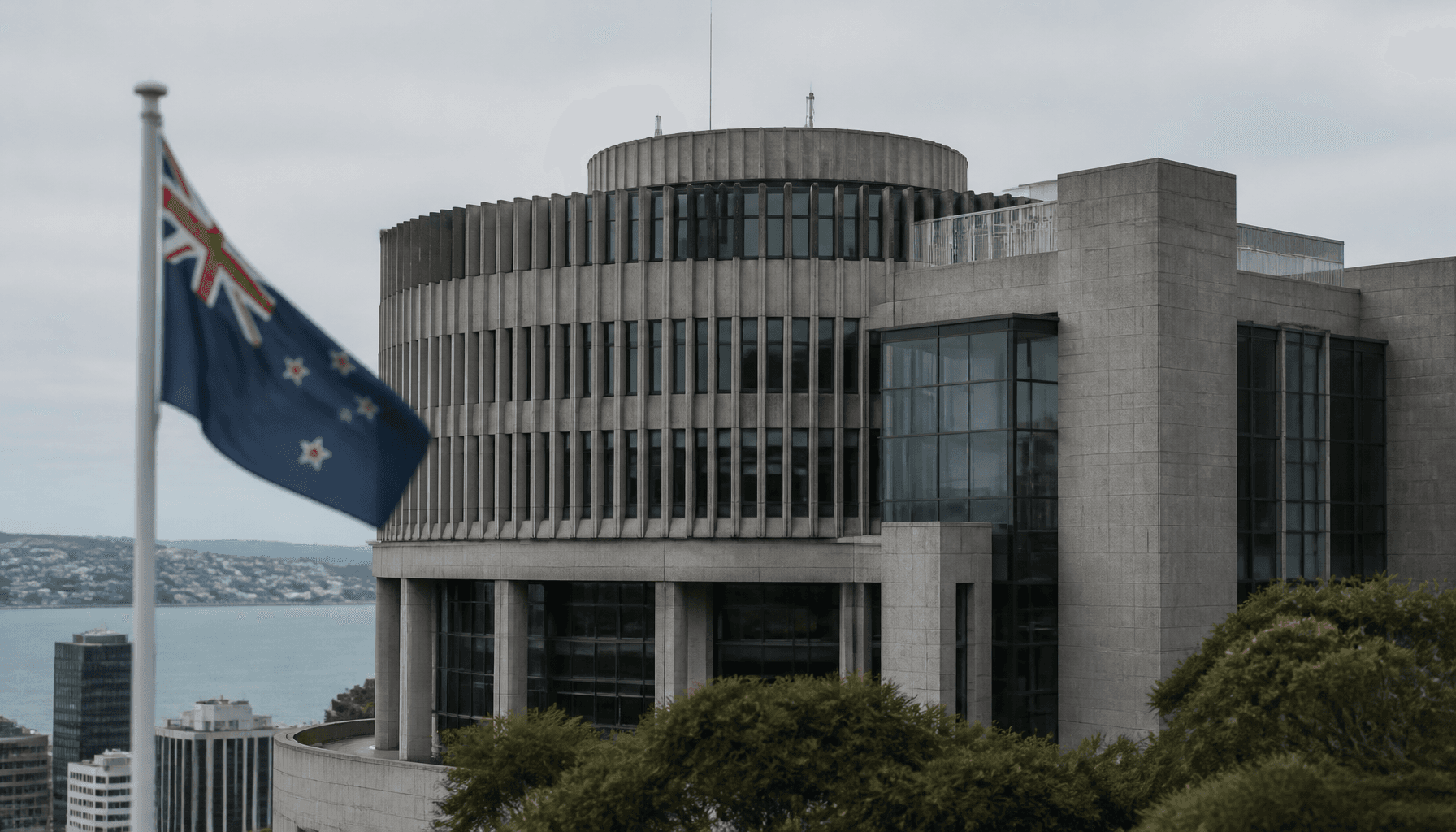
The Reserve Bank of New Zealand's Wellington headquarters, where the Monetary Policy Committee split 4-3 on 28 October to hold the OCR at 2.75 per cent.
Trade-offs in the Conditional Tightening Path
The hold provides short-term relief to borrowers but leaves savers facing lower deposit rates amid persistent inflation pressures. Major banks including ANZ, ASB and BNZ maintained forecasts for the OCR to reach 3.5 per cent by early 2027, according to post-decision analysis.
A hike on 28 October would have been the most prudent course, ANZ chief economist Sharon Zollner said. ASB senior economist Mark Smith described the hold as a dovish hold and expects three 25 basis point hikes in December, February and March.
BNZ head of research Stephen Toplis described the decision as one that frankly flabbergasted economists. It moved diametrically against market pricing and consensus.
The pause delays one 25 basis point increment. Fixed-rate mortgage repricing remains in train as swap rates have already partially adjusted for the expected tightening path.
Second-Order Effects for Households and Businesses
Households rolling off 1- and 2-year fixed rates in Q4 2026 and Q1 2027 will still face significantly higher refix rates. The hold offers psychological rather than structural relief.
Housing market activity is likely to remain suppressed through the first half of 2027. Mortgage affordability constraints stay in place with the tightening bias intact.
Inflation expectations risk rises if December data confirms the 4.4 per cent CPI projection. Two-year expectations could rebase further upward if the MPC is seen to have been slow.
Fiscal-monetary coordination faces added complexity. Treasury Pre-election Economic and Fiscal Update 2026 forecasts real production GDP annual average growth of 1.6 per cent in 2026, rising to 2.3 per cent in 2027. Higher-for-longer inflation erodes the real value of fiscal transfers.
Regional disparities may widen. Export hubs in Waikato, Manawatū-Whanganui, Southland and Canterbury benefit from resilient global demand and manufacturing strength. Urban consumption centres in Auckland and Wellington face continued domestic demand softness.
Historical Context and Precedent
This episode echoes the Reserve Bank's pause during the mid-2023 tightening cycle. The Bank held briefly, assessed data, then resumed tightening and reached a higher terminal rate than the pause implied. The October 2026 decision fits the same template of a tactical stop, not a strategic retreat.
The risk remains that the pause costs credibility without reducing the eventual terminal rate, simply delaying the inflation peak, as occurred in 2023.
In 2007-08 the Reserve Bank was slow to ease as the global financial crisis hit while focused on domestic inflation. The inverse risk here is holding too long while inflation stays above target. If global growth holds, oil prices remain elevated and the New Zealand dollar stays soft, the Bank could face a 4.4 per cent CPI print with a 2.75 per cent OCR at the December meeting.
The Counter-Argument and Evidence Assessment
Some analysts viewed the hold as a prudent data-dependent pause rather than a pivot. Markets priced approximately 75 per cent chance of a December 2026 hike following the decision.
BNZ research post-decision expected a 25 basis point hike in December 2026 with sequential hikes thereafter, maintaining a clear tightening bias.
The evidence for the majority view rests on subdued domestic demand and the need to assess lagged effects. The minority view rests on firmer core inflation and the projected December spike. Incoming data on inflation, demand and global conditions will determine whether the pause extends or accelerates.
Open Questions Ahead of December
The Reserve Bank's Survey of Expectations, due before the December Monetary Policy Statement, will be watched for signs of de-anchoring above the 3 per cent top of the band.
Stats NZ will release the December quarter CPI in early 2027. That print will test whether the 4.4 per cent projection materialises and whether fuel pass-through remains contained.
Treasury and Reserve Bank forecasts for 2027 GDP growth of 2.3 per cent assume inflation moderates. Any delay in rate normalisation risks entrenching higher inflation expectations.
What to Watch Next
The 9 December 2026 Monetary Policy Statement will reveal whether the October hold extends into a longer pause or gives way to resumed tightening. Data releases on inflation, retail sales and manufacturing in the interim will shape that outcome. Households and businesses should prepare for continued upward pressure on borrowing costs through the first half of 2027 regardless of the December decision.